Showing posts with label Islam. Show all posts

October 4, 2010

Challenging Islamophobia: Liveblog


Today I'm liveblogging a panel at the Center for American Progress titled "Challenging Islamophobia: The Role of Civic and Faith Groups in Combating Anti-Muslim Hate Speech and Crimes." Here's a list of the participants:

Moderated by:

Faiz Shakir, Vice President and Editor of Think Progress (CAP Action)

Featured panelists:

Wajahat Ali, playwright, essayist, humorist, and attorney
Haris Tarin, Washington, D.C. Office Director, Muslim Public Affairs Council
Rev. Chloe Breyer, Executive Director, Interfaith Center of New York and Episcopal Priest, Diocese of New York
Ken Gude, Managing Director of National Security and International Policy, Center for American Progress

These types of panels are a sort of outreach attempt by think tanks like CAP, The New America Foundation, CATO, and others. It's a kind of interesting attempt by people who make policy to try to invite in the public. I have my doubts as to how much the policymakers actually are influenced by the audience input at these kinds of events, but it's at least an interesting thought. The room where this is taking place is pretty full, only a couple of empty seats.

As a side note, it's a wonderful thing that this panel has at least one Christian in the panel.

  • Shakir talks about a discussion last week on ABC's This Week. The topic was "Should Americans be afraid of Islam?"
  • Ali cites a statistic that says 60 percent of Americans don't know a Muslim...so going only on recent history, he doesn't blame most people for being afraid. Ergo, we need to get to know each other better to eliminate fear.
  • Tarin talks about people who buy into the idea of a clash of civilizations promoting that idea actively: Frank Gafney, Pamela Gellar, people "who have no credentials" who have been given a platform to speak about Islam. According to him, it's these people who want to exclude and are against American pluralism.
  • Rev. Breyer works with people of about 16 different faiths to work on issues like foreclosuers, education, etc. She seems to see interfaith support networks as a powerful counter-balance to things like "Burn A Quran Day."
  • Another important point by Breyer: there's a real need for people to be asked questions on topics they're ignorant about without fear of being called bigots. Pretty much true of any religion.
  • Gude talks about the pastor who was going to burn the Quran being big news in the Muslim world before it was news here. This in spite of the fact that that pastor has 50 congregants...what a clear example of relatively small actions having huge implications in the Internet era.
  • Tarin: "The Muslim-American community sees itself as an American body."
  • Ali gets talking about Park 51 (the "Ground Zero Mosque")...gives the media credit for being actually pretty fair about the issue.
  • Another good point by Ali about the pre-9/11 media cycle of Muslim-related stories, starting back in 1979: Islamic revolution, violence somewhere else, reaction, no story about Muslims, Gulf War, violence, war, victory, no story about Muslims, 1993 bombing of WTC, anger, no story about Muslims...
  • Tarin: If you've never met a Muslim, the idea of jihad, or Muslim prayer, or shariah, or any other Muslim concept, is abstract to you...those people who only have Google to rely on are receiving distorted information at best.
  • Question asked: there's a push by some people, such as the Tea Party and some other xenophobes to view American culture and identity as Christian...how do you combat that? Ali answers: get more voices of not "white, Christian, middle class" people out there, and create non-Muslim allies, people like Jon Stewart, Kanye West.
  • Breyer points out that in the 1830s, there were similar arguments about Catholicism not being a religion. It takes time to integrate.
  • Tarin: African-American Muslim experience goes far back and shouldn't be ignored...25% of slaves brought to US were Muslim.
  • Ali: storytelling is what will ultimately unite us, you need a Cosby Show, or a Dave Chappelle, you need to illuminate the ordinary and do in one year what 10 years worth of policy papers can do.
image by muslim page

April 19, 2010

Supreme Silliness

The notable lack of religious diversity on the Supreme court is a pretty old and tired topic. If you didn't already know, there are now, with the retirement of John Paul Stevens, only Catholics and Jews on the court.Stevens was the only Protestant, as this article in the New York Times points out.
But I found one part of this article utterly ridiculous, and haven't been able to get it out of my head. Here goes:
'The practical reality of life in America is that religion plays much less of a role in everyday life than it did 50 or 100 years ago,'' said Geoffrey R. Stone, a law professor at the University of Chicago. Adding a Protestant to the court, he said, would not bring an important element to its discussions.

''These days,'' said Lee Epstein, a law professor at Northwestern and an authority on the court, ''we've moved to other sources of diversity,'' including race, gender and ethnicity.'

With due respect to folks who have far greater expertise than I on the Supreme Court, I think this is silliness. To say that we live in a post-religious society is as unrealistic as to say that President Obama's election solved racism. Not that there aren't people saying that too.

I say this because I can already imagine the round the clock paranoid coverage were a Supreme Court nominee, say, Muslim. Heck, while we're at it, let's speculate on the combination of paranoia, curiosity, and hate that would be generated by a Sikh, Buddhist, Hindu, or other religious minority.

Furthermore I would argue something about this:
"religion, which once mattered deeply, has fallen out of the conversation. And it seems to make people uncomfortable on the rare occasions it is raised."
It seems, simply, to be a contradiction in terms. What makes us most uncomfortable perhaps matters the most deeply.

January 8, 2010

Seeking Interfaith Understanding

Quick Housekeeping Note: I'm back and blogging it up again in 2010, so happy new year. With my current work schedule it's just to hard to keep doing the daily religion news summary, but I will make an effort to have at least one news summary a week from now on, as well as more regular in-depth commentary about religion stories I'm finding interesting. Now back to our regularly scheduled programming...

There's a piece online from TIME right now about Malaysia's High Court ruling that the word Allah is not exclusive to Muslims. This allows Christian (and presumably other faiths) to publish the word in their newsletters, and claim that Allah is their god as well, apparently a controversial statement because of the country's religious/ethnic makeup.
Some 60% of Malaysia's 28 million people are Malay Muslim, while the rest are ethnic Chinese, Indians and indigenous tribes, practicing various faiths including Buddhism, Christianity, Hinduism and animism. Among Christians, the majority Catholics number about 650,000, or 3% of the population.
I know little about the Malay language but the Catholic Church in Malaysia has apparently been using Allah in its Bibles and otherwise for a long while, and in a court case in 2008 cited pre-Islamic use of the term.

But the point missed here by many parties seems to be that as Abrahamic faiths, there is a common god, regardless of names. As the latter part of the TIME article describes, the fact that the Muslim community is so strongly opposed is one of a series of worrying incidents of intolerance in Malaysia. It seems, to me, a missed opportunity for understanding and dialogue.

October 6, 2009

Religion News for 10/6/2009

Hello readers! Today in 1979, Pope John Paul II became the first pope to visit the White House. And today in religion news...
  • The Supreme Court will allow documents from the cases of sex abuse by Catholic priests to go public. (NPR)
  • An Italian scientist has reproduced the Shroud of Turin, which is suspected to be (by some, at least) a medieval forgery. (Reuters)
  • A former military lawyer is suing so people won't pray for his harm, among other threats. (USAT)
  • Brother Ali is a rapper who draws inspiration from Islam. (NPR)

October 5, 2009

Religion News for 10/5/2009

Hello Readers! It's a beautiful Monday morning. Here's what's been happening lately in religion news...
  • Miguel Humberto Diaz is the new American ambassador to the Vatican, and is himself a theologian. (Reuters)
  • Pew says support for abortion rights is declining, and that the debate over it is losing steam. (Pew)
  • Six of the Supreme Court's justices are now Roman Catholics. Politics Daily's David Gibson has some interesting thought on the implications of that. (PD)
  • Saudi Arabia's King Abdullah has taken a stance against evolution at his kingdom's only co-ed university. (Reuters)

September 30, 2009

Religion News for 9/30/2009

Wow, readers, it's almost October! On this day in 1962, César Chávez and Dolores Huerta founded the National Farm Workers Association (later the United Farm Workers). And today in religion news...
  • Berlin is working to accommodate the prayer needs of Muslim students, but the ruling which permitted it is generating some interesting questions. (Reuters)
  • Apparently today is Blasphemy Day. I'll be goddamned. (PD)
  • An Arizona judge has granted an injunction on recently passed abortion regulation, pending suit by Planned Parenthood and the Center for Reproductive Rights. (AZCentral)
  • A lawsuit in Oklahoma is challenging the constitutionality of abortion laws there, which would require doctors to disclose new information about women receiving abortions. (AP/KJRH)
  • A Malaysian woman will be caned for drinking beer under Shari'ah law.
  • Bill Tammeus has a saddening and interesting graphic depicting the splits in the Christian church, and an interesting reflection on the ELCA split, which may yet worsen. (Tammeus)


September 29, 2009

Religion News for 9/29/2009

Hello readers! Today's quote comes from C.S. Lewis' Screwtape Proposes a Toast:

"No man who says 'I'm as good as you' believes it. He would not say it if he did. The St Bernard never says it to the toy dog, nor the scholar to the dunce, nor the employable to the bum, nor the pretty woman to the plain." I found it pretty provocative. What are your thoughts?

Recently in religion news...
  • Confucius' 2,560th birthday was celebrated yesterday. (CCTV)
  • The hotels and businesses in Saudi Arabia, which depend on the hajj (a sacred journey made by many Muslims to Mecca) for revenue, are being impacted by fears of the H1N1 (swine flu) virus. (Reuters)
  • Hindus in India's Kashmir region, known as Pandits, may be returning home due to government encouragement. (Reuters)
  • There's an interesting interview with evangelical performance artist/pastor Rob Bell over at Articles of Faith. He discusses his take on suffering and creativity. (AOF)
  • Remember the earlier post (9/22) about Thich Nhat Hahn? Vietnamese authorities have destroyed the monastery of his followers. (AP/SeattleTimes)
  • South Dakota is considering throwing out its ban on embryonic stem cell research. (AP/Pierre Capital Journal)
  • The Lutheran church is still struggling over internal disputes over gay marriage and gay clergy. (Indianapolis Star)

September 24, 2009

Religion News for 9/24/2009

Hello, readers! Today in 622, the prophet Muhammad completed his hijra from Mecca to Medina. And today in religion news...
  • Worldwide, witch hunts persecuting women and children are on the rise, according to the UN. (Reuters)
  • Tomorrow's Islam on Capitol Hill [site contains automatic audio] event is already attracting attention, not all of it positive, and not all just from anti-Muslim groups. (PD, Beliefnet)
  • Pope Benedict XVI will be making his first official visit to Great Britain. (Times of London)
  • Leaders from African-American churches will be endorsing Obama's plan for healthcare reform. (LAT)
  • Two openly gay members of Congress have endorsed legislation barring workplace discrimination on the basis of sexual orientation or gender identity. (Baltimore Sun)

September 22, 2009

Religion News for 9/22/2009

Hi, readers! It might be a bit late, but happy Eid and Rosh Hashanah to those celebrating. Today is the birthday of Pakistani philosopher Manzoor Ahmad. And today in religion news...
  • Catholic bishops will discuss Middle East peace. Next year. (AP)
  • An interesting account of a non-Muslim fasting for a day during Ramadan is over at Speaking of Faith's blog. (SOFObserved)
  • There's still conflict about use of eagle feathers in Native American ceremonies. An LA Times article explores the government's role in protecting eagles versus its repression of Native American religious expression (LAT)
  • Vietnamese authorities are persecuting followers of a Buddhist monk, Thich Nhat Hanh, who they say advocates "sabotage." (AP via ABC)
  • Mike Huckabee won a straw poll for Republican presidential nomination among "Values Voters" conference attendees. (Pew/RNS)
  • A Vatican official, Archbishop Raymond Burke, has said the Church erred in administering funeral rites to the late Senator Kennedy. (PD)
  • Physician-assisted suicide is becoming an increasingly hot political topic in Britain. (Reuters)

September 17, 2009

Religion News for 9/17/2009

Hello readers! Happy Mexican Independence Day. Learn about Mexico's national icon, Our Lady of Guadalupe, here. Today in religion news...
  • Mike Huckabee, Mitt Romney and Tim Pawlenty will be at a "Value Voters" gathering in Washington this weekend. Conspicuously absent? Sarah Palin. (Reuters)
  • Sikh Americans continue to be a casualty of post 9/11 paranoia and bias. At issue this time? The wearing of turbans in federal and state identification photos. (Times of India)
  • The largest church in the US, Lakewood Church in Houston, attracts 43, 500 followers every weekend. Much like other huge churches, it is an evangelical church with more "contemporary" music. (USAT)
  • A pattern of violence against Christians and other minorities is emerging in Pakistan, according to the watchdog group Human Rights Commission of Pakistan. (NYT)
  • If you live near Plano, TX, you can attend an interfaith Ramadan iftar (fast-breaking dinner) tomorrow. (DMN)

September 14, 2009

Religion News for 9/14/2009

Hello readers! On today in 1975, Elizabeth Ann Seton was canonized, becoming the first native-born American saint. In religion news today:

  • Frequent pro-life protester James Poullion was killed on Friday. (Politics Daily-1-2)
  • Congressman Keith Ellison, D-Minn., is the country's first Muslim congressman. He had a few interesting comments for the Religion Newswriters Association. (Articles of Faith)
  • Indonesia's Aceh province has approved stoning to death for adultery and other harsh punishments for what some lawmakers see as amoral. Human rights activists, including the gay community, are protesting. (SFGate)
  • Atheists and agnostics held a conference in Indianapolis over the weekend. (Louisville Courier-Journal)
And it's not news, but I thought this column in Sojourners was pretty poignant.


September 11, 2009

Religion News for 9/11/2009

Hello readers. Today marks the eighth anniversary of the 9/11 attacks. I wish all of you a peaceful day of reflection and contemplation.

  • The NYT has a wonderful essay by a Muslim woman explaining 9/11 to her child. (NYT)
  • The Boston Globe's religion writer lays out a few ways immigrants are changing the face of religion in America. (Articles of Faith)
  • A new group called "What's Your Response?" is fighting human trafficking, which is still under the radar here in the US. (Sojourners, CNS)
  • Pope Benedict XVI will be meeting with artists from all over the world in November, in order to re-kindle the relationship between religion and art. (CNS)

September 10, 2009

Religion News for 9/10/2009

Hello, readers! Today in 422, Celestine I began his reign as pope. And today...
  • Mohammed is the third most popular boy's name in England. (Daily Mail)
  • One in 33 women has been the target of sexual advances by a religious leader, according to a new study by Baylor University. (WaPo)
  • Hassen Abdellah, president of the Dar-ul-Islam mosque in Elizabeth, N.J., is trying to get 50,000 Muslims to pray on Capitol Hill on September 25th. (Islam on Capitol Hill-site contains automatic audio, WaPo, WaPo)
  • Some Jewish communities are using Rosh Hashanah (September 18th this year) as a reason to emphasize stewardship of the earth. (RNS)


September 9, 2009

Religion News for 9/9/2009

Happy 9/9/09, readers!
  • The Washington Post claims that the Christian Right is being resuscitated by the healthcare debate. (WaPo)
  • Mahmoud Amedinejad has put a woman in his presidential Cabinet. (Miami Herald)
  • Americans see Muslims as facing more religious discrimination than people of other faiths. (Pew)
  • A traffic sign near the University of Utah was the victim of vandals/atheists. (Salt Lake Trib)
  • The President of the Columbia Chapter of Americans United for Separation of Church and State has problems with state officials and public prayer. (The State)

July 23, 2009

Quick update...

The Northwest Religious Liberty Association is saying that Oregon's governor has signed the bill discussed yesterday as of the 16th. I've so far been unable to find another source saying so, as the bill signing seems to have been kept fairly quiet.

The angle of news on the bill has largely been about the issue discussed yesterday, wherein public school teachers are prohibited from wearing religious symbols or garb. But I do want to give balance on what proponents feel the bill does. From the NRLA's press release:

"What this Act does is clarify the responsibility of employers to accommodate the scheduling of leave time for the observation of religious holy days, or for the wearing of religious apparel in the workplace unless it poses a “significant difficulty or expense” to their business(es).
More specifically, it restores the original federal Title VII legal standard involving religious discrimination which obligated employers to demonstrate that they reasonably attempted to accommodate the sincerely held religious beliefs and practices of their employees before claiming that such beliefs and practices posed a “significant difficulty” and “expense” for their business(es). [Emphasis theirs.]"

July 22, 2009

Religious Expression - A Public Concern?


A law is on the books in Oregon, which says:

"No teacher in any public school shall wear any religious dress while engaged in the performance of duties as a teacher.”

Now, a bill called the Oregon Workplace Religious Freedom Act, also known as SB786, among other things, maintains that law. Pennsylvania is the only other state with such laws.

Which begs the question: why is the wearing of a kippah, a turban, a hijab, or a crucifix a problem in a public school setting, provided the teacher is not proselytizing?

Not being a parent myself, I admit that I probably can't appreciate the difficulty of explaining the religious practices of others to a child, much less my own. But I would hope parents would have enough faith in their teachers to be able to maturely and simply discuss differences in the classroom, be they religious, racial, or otherwise, without proselytizing.

Moreover, the law sends a mixed message to students with regards to civil liberties. Reading the ACLU's guide on freedom of expression for students makes it clear that students may wear religious garb and speak relatively freely, provided there is no interference in the education of other students. Not to afford the adults who teach them the same right seems, to me anyhow, rather strange.

Since the bill has already passed the Oregon legislature, Sikh and Muslim groups are encouraging the state's governor to issue a veto.

You can read the bill in question here.

So do you think that a teacher's wearing of religious items imparts religious value to their students? Is it a matter of keeping religion out of the classroom, or is it more vital that children and their parents use this as an opportunity to understand the diversity of the world we live in?

October 9, 2008

Religulous!


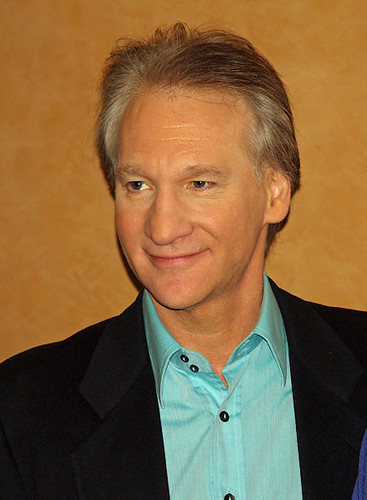
Yesterday, I went to the movie theater to see Bill Maher's new movie, Religulous. I've been a fan of Maher's for a while, and sincerely admire his ability to take on taboo subjects unabashedly, though I'll be the first to admit he's often abrasive.

Religulous deals primarily with the absurdities of the Abrahamic religions: Christianity, Islam, and Judaism. There's the fact that all religions require beliefs that make no logical sense--miracles. There is the hypocrisy evident in enormous and wealthy clergy when religions advocate thrift and charity. And there are the disconnects between religion and science as well as religion and nationalism. There's also a bit of attention paid to newer religions, namely Scientology and Mormonism, though to the detriment of the movie and the audience's understanding, nobody of those faiths is represented.

Clearly this is a bit much to go into here, but I would like to get at one central point of Maher's movie. A driving question of the movie is why faith is inherently good. And I feel that ultimately, he answers his own question by saying that he does understand that when all else is gone, when you're alone in prison, a loved one's died, or you struggle with addiction, faith can be the only thing you have left. He acknowledges moments of what he might refer to as his own weakness, making a deal with God to quit smoking at age 40.

Maher refers to himself as an agnostic, rather than as an atheist, because atheism reflects something of the certainty of the religions that he just can't swallow. But in the closing scene, filmed where, according to Maher, Christians believe the world will come to an end, he does say (and I'm paraphrasing) that no God will come to save us.

Some interesting parallels are made by Maher as a mythologist. He points out the numerous similarities of Jesus to other gods of older religions, such as Krishna (also the product of a virgin birth according to some Hindu sources) and the ancient Egyptian god Horus (some sources cite Horus as the product of a virgin birth, and the movie relates a story wherein Horus resurrects a person with a name translated as "Lazarus").

Perhaps most alarming about this movie are not the questions Maher asks but the unwillingness of some people he talks to to engage him in critical conversation. If anything, the movie makes painfully obvious the need for religious eductation, particularly for those vocal about their beliefs.

Below, there are some videos of Maher's interview with Jon Stewart. What do you think about his stances towards belief? Should people with abiding faith be able to answer questions so harshly critical of belief itself?


Photo by david_shankbone
Used under the CC Attribution License