Showing posts with label Judaism. Show all posts

October 4, 2010

Religion News for 10/4/2010

Hey I just wanted to let you all know something I found out at today's panel before I put up today's news roundup: Open Mosque Week is coming up soon. I hope I see a lot more of this kind of thing in the future. Nice to see this as a counter to the awful drama of Burn A Quran Day. Can anybody recommend a mosque to visit in DC?

Anyhow, here's some stuff you might have missed:
  • A French Lutheran couple has started a blog about their walk from Erfurt, Germany to Rome (following Luther's own trail), in an effort to improve Catholic-Protestant relations. (Here I Walk via Tammeus)
  • I wouldn't ordinarily include this but it's fun to imagine the religious implications of a civilization or even forms of life literally alien to our own. A new planet with the potential to sustain life has been discovered. If you think Columbian arrival in the New World is responsible for the growth of a number of religions, just wait. (Discovery)
  • Why pray for famed, reviled, and respected atheist Christopher Hitchens to recover from cancer? A bunch of Texan religious leaders offer their thoughts. One pretty touching reflection on Hitchens from Jonathan Tran, Assistant Professor of Theological Ethics, Department of Religion at Baylor University: "Too bad this person isn't a Christian; he'd be a good one."(DMN)
  • Yep, religious Americans are lacking in their knowledge about religion, as compared to atheists and agnostics. (Pew)
  • In the meantime, people (some of whom wouldn't describe themselves as religious, like the person in this story's lede) are increasingly interested in studying religion. (BuffaloNews)
  • CNN's Rick Sanchez is off the air after calling Jon Stewart a bigot, among other comments. (WSJ via GetReligion)

September 25, 2009

Religion News for 9/25/2009

Hi readers! Today marks the anniversary of the closing of the last of the Magdalene Asylums, in 1996. And today in religion news:

  • The new interim Massachusetts senator, Paul G. Kirk, is the grand-nephew of a Boston cardinal. All sorts of interesting tidbits at Articles of Faith. (AOF)
  • Women in Christian Media has opened a Chicago chapter. (DMN)
  • Benjamin Netanyahu has called Iran's president "the antithesis of moral." (Youtube)

September 15, 2009

Religion News for 9/15/2009

Hello readers! Today in 1352, Ewostatewos, a monk and leader in the formation of the Ethiopian Church, died in Armenia. And in religion news today...

  • Alfred Gottschalk, a leader of Reform Judaism and a Holocaust survivor, died last Saturday from complications related to a car accident. (LAT)
  • Barack Obama is walking a tightrope with regards to "faith-based initiatives" begun by Bush. (WaPo)
  • One filmmaker claims he couldn't find a distributor in the US for his movie about Darwin because of the ongoing conflict about Darwin's theory of evolution. (Christian Post)

September 10, 2009

Judaism, Liberalism, Youth


Norman Podhoretz had an opinion column in yesterday's WSJ, asking the question "Why are Jews Liberals?" His book, of the same title, I saw today at a bookstore. As a 26-year-old living in a city with an admittedly small but nonetheless visible Jewish community, I was perplexed as to why anybody might ask this question. Most of the Jews I know, who are my age or not far from it, wouldn't question their liberal political beliefs.

Podhoretz himself traces back the integration of American Jews into the Democratic party to the days of FDR in his article. And it goes without saying that party loyalty dies hard in the U.S. among ethnic, and to some extent, religious groups. Of course, any population gets more conservative gets with time and success, as Podhoretz did decades ago.
According to the Jewish Virtual Library, "The Jewish population is aging, compared to 1990, and is substantially older than that of the total U.S. population." But it is worth noting the influence of youth on the aging Jewish population of the country.

Among one of my closest friends is one radically liberal young man who has worked in the Palestinian territories and Israel to come to a peaceful solution. He's of Jewish descent, but non-practicing. A recent article in Sojourners profiles a similar person. As younger generations of American Jews are more cognizant of the problems facing the Israel-Palestinian conflict, they may start doing more to solve the conflict. Why? Because the distance of their Americanism may give them a chance to step back from immediate involvement, but the intimacy of the US-Israel relationship provides an urgency, not to mention the ancestral link to the conflict. This suggests to me that the younger generation of Jews is less attached to the question of support for Israel, and more attached to the idea of peace.

Cultural Jews, to borrow a phrase, take an increasingly important role in the mind of the younger Jewish population. To take a kind of offbeat example, you can further look at the influence of entertainers such as foul-mouthed comedy princess Sarah Silverman, and her urging of (NSFW) young Jews to get their grandparents on Obama's side via her "Great Schlepp."

So why are Jews liberals? Not being Jewish, I can only speak from an outside perspective, but to the extent that I might be so bold, I would argue that the older Jewish community has a strong bond with its progressive though often non-religious youth, which tends towards liberalism.

Other theories? I'd love to hear them. And what to make of the "buyer's remorse" Podhoretz hopes for in the introduction of his article?

photo by zeevveez

Religion News for 9/10/2009

Hello, readers! Today in 422, Celestine I began his reign as pope. And today...
  • Mohammed is the third most popular boy's name in England. (Daily Mail)
  • One in 33 women has been the target of sexual advances by a religious leader, according to a new study by Baylor University. (WaPo)
  • Hassen Abdellah, president of the Dar-ul-Islam mosque in Elizabeth, N.J., is trying to get 50,000 Muslims to pray on Capitol Hill on September 25th. (Islam on Capitol Hill-site contains automatic audio, WaPo, WaPo)
  • Some Jewish communities are using Rosh Hashanah (September 18th this year) as a reason to emphasize stewardship of the earth. (RNS)


July 23, 2009

Quick update...

The Northwest Religious Liberty Association is saying that Oregon's governor has signed the bill discussed yesterday as of the 16th. I've so far been unable to find another source saying so, as the bill signing seems to have been kept fairly quiet.

The angle of news on the bill has largely been about the issue discussed yesterday, wherein public school teachers are prohibited from wearing religious symbols or garb. But I do want to give balance on what proponents feel the bill does. From the NRLA's press release:

"What this Act does is clarify the responsibility of employers to accommodate the scheduling of leave time for the observation of religious holy days, or for the wearing of religious apparel in the workplace unless it poses a “significant difficulty or expense” to their business(es).
More specifically, it restores the original federal Title VII legal standard involving religious discrimination which obligated employers to demonstrate that they reasonably attempted to accommodate the sincerely held religious beliefs and practices of their employees before claiming that such beliefs and practices posed a “significant difficulty” and “expense” for their business(es). [Emphasis theirs.]"

July 22, 2009

Religious Expression - A Public Concern?


A law is on the books in Oregon, which says:

"No teacher in any public school shall wear any religious dress while engaged in the performance of duties as a teacher.”

Now, a bill called the Oregon Workplace Religious Freedom Act, also known as SB786, among other things, maintains that law. Pennsylvania is the only other state with such laws.

Which begs the question: why is the wearing of a kippah, a turban, a hijab, or a crucifix a problem in a public school setting, provided the teacher is not proselytizing?

Not being a parent myself, I admit that I probably can't appreciate the difficulty of explaining the religious practices of others to a child, much less my own. But I would hope parents would have enough faith in their teachers to be able to maturely and simply discuss differences in the classroom, be they religious, racial, or otherwise, without proselytizing.

Moreover, the law sends a mixed message to students with regards to civil liberties. Reading the ACLU's guide on freedom of expression for students makes it clear that students may wear religious garb and speak relatively freely, provided there is no interference in the education of other students. Not to afford the adults who teach them the same right seems, to me anyhow, rather strange.

Since the bill has already passed the Oregon legislature, Sikh and Muslim groups are encouraging the state's governor to issue a veto.

You can read the bill in question here.

So do you think that a teacher's wearing of religious items imparts religious value to their students? Is it a matter of keeping religion out of the classroom, or is it more vital that children and their parents use this as an opportunity to understand the diversity of the world we live in?

January 27, 2009

Jezebel!


Recently I finished reading Jezebel: The Untold Story of the Bible's Harlot Queen. It's an interesting historical biography of one of the Bible's greatest villains. Author Lesley Hazleton examines archeological findings, the current Holy Land environs, biblical and modern sociology, and historical texts in her exploration of Jezebel as a woman, character, and ruler.

Many people tend to think of the Bible as a book written by God, or transmitted divinely through his servants into the book. But historical evidence clearly shows that the Old Testament, at least, was written down long after the events that took place. Hazleton gives us a clear idea of the biases and goals of those ancient authors. It's not to say that the story of Jezebel in the Bible is not true, in any real sense it's as true as any story, but it is nonetheless colored by the writers and numerous editors and translators of the book of Kings.

In examining Jezebel, we can tell that the book is written from a clearly modern, feminist perspective, giving a refreshing and occasionally jarring view of what it means to be a harlot. This goes back to more than just the sexual connotations of the word, exploring the religious meaning. For example, there is a short bit of background on the word "infidel," and an interpretation of why we use the word "bitch." So much in this book is explored through language and derivative meaning that at points the connections could be a bit of a stretch.

There are also parallels to be drawn between ancient prophets and modern religious firebrands, and the deep reasons for the Israeli-Palestinian conflict today. In examining the hate that fuels much of the fighting in the Holy Land, Hazleton would contend that Elijah, deeply involved in Jezebel's story, is the forerunner of many a fundamentalist religious leader, in each of the three Abrahamic faiths.

The deep thoughts here are engaging, and I would reccomend the book highly to anybody looking to know more about how the Bible was written. I fully intend to read Hazleton's other similar book on Mary, mother of Jesus.

Photo by ClockworkGrue

October 9, 2008

Religulous!


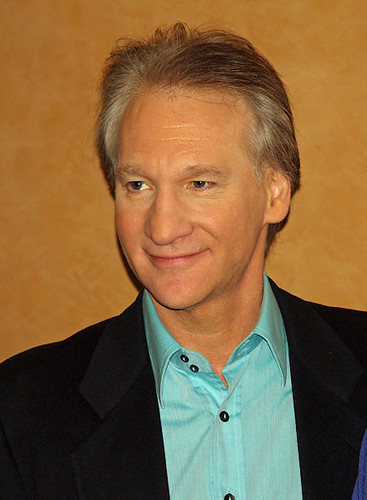
Yesterday, I went to the movie theater to see Bill Maher's new movie, Religulous. I've been a fan of Maher's for a while, and sincerely admire his ability to take on taboo subjects unabashedly, though I'll be the first to admit he's often abrasive.

Religulous deals primarily with the absurdities of the Abrahamic religions: Christianity, Islam, and Judaism. There's the fact that all religions require beliefs that make no logical sense--miracles. There is the hypocrisy evident in enormous and wealthy clergy when religions advocate thrift and charity. And there are the disconnects between religion and science as well as religion and nationalism. There's also a bit of attention paid to newer religions, namely Scientology and Mormonism, though to the detriment of the movie and the audience's understanding, nobody of those faiths is represented.

Clearly this is a bit much to go into here, but I would like to get at one central point of Maher's movie. A driving question of the movie is why faith is inherently good. And I feel that ultimately, he answers his own question by saying that he does understand that when all else is gone, when you're alone in prison, a loved one's died, or you struggle with addiction, faith can be the only thing you have left. He acknowledges moments of what he might refer to as his own weakness, making a deal with God to quit smoking at age 40.

Maher refers to himself as an agnostic, rather than as an atheist, because atheism reflects something of the certainty of the religions that he just can't swallow. But in the closing scene, filmed where, according to Maher, Christians believe the world will come to an end, he does say (and I'm paraphrasing) that no God will come to save us.

Some interesting parallels are made by Maher as a mythologist. He points out the numerous similarities of Jesus to other gods of older religions, such as Krishna (also the product of a virgin birth according to some Hindu sources) and the ancient Egyptian god Horus (some sources cite Horus as the product of a virgin birth, and the movie relates a story wherein Horus resurrects a person with a name translated as "Lazarus").

Perhaps most alarming about this movie are not the questions Maher asks but the unwillingness of some people he talks to to engage him in critical conversation. If anything, the movie makes painfully obvious the need for religious eductation, particularly for those vocal about their beliefs.

Below, there are some videos of Maher's interview with Jon Stewart. What do you think about his stances towards belief? Should people with abiding faith be able to answer questions so harshly critical of belief itself?


Photo by david_shankbone
Used under the CC Attribution License

October 8, 2008

An Introduction and Some Background


Nice to meet you all!

My name is A.C. Valdez. I am a freelance journalist living in the Washington, D.C. area. I have started this blog as a way of keeping track of my thoughts on religion news and religion issues.

To give you some idea where I'm coming from, I was born in L.A. and in the 90s, my family moved to the D.C. suburbs. I was raised Catholic, though I am no longer an observer. My father is a liberal Catholic. My mother (who is now deceased) was raised Catholic as well, gave up worship as an adult and eventually adopted the attitude that God wants very much for people to figure out how to live for themselves. I probably have Jewish ancestry somewhere back there. Though I have no better evidence of it, my father claims many Spanish Jews migrated to the New World due to persecution.

I have worked at PBS and NPR as well as in smaller media companies. And I really fell in love with religion as a "beat" while working at NPR. Religion or faith means so much to many people, and in such different ways. Unlocking that meaning is a fascinating process. And it probably goes back to my fascination as a kid with ancient Greco-Roman and Norse myths. I remember asking my dad one time why we believed what we did as I grew up and he just replied "Well, it's our mythology." So I studied Catholicism throughout high school. And I've loved learning about religion ever since.

Hopefully by reading this blog, and leaving comments, you'll be able to learn something new, and teach me a couple of things, too.

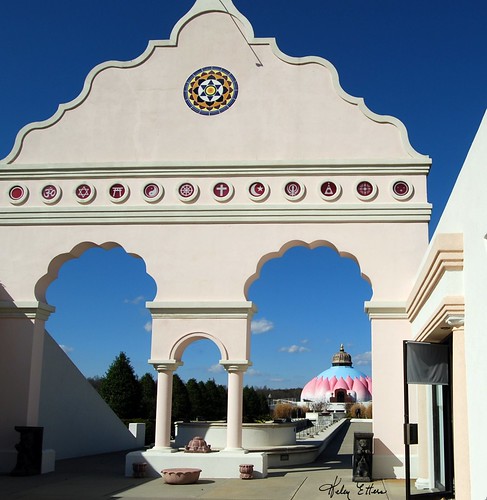
Photo: "Shrine To World Religions" by EtterVor
Used under a CC Attribution License