- The NYT has a wonderful essay by a Muslim woman explaining 9/11 to her child. (NYT)
- The Boston Globe's religion writer lays out a few ways immigrants are changing the face of religion in America. (Articles of Faith)
- A new group called "What's Your Response?" is fighting human trafficking, which is still under the radar here in the US. (Sojourners, CNS)
- Pope Benedict XVI will be meeting with artists from all over the world in November, in order to re-kindle the relationship between religion and art. (CNS)
September 11, 2009
Religion News for 9/11/2009
Hello readers. Today marks the eighth anniversary of the 9/11 attacks. I wish all of you a peaceful day of reflection and contemplation.


September 10, 2009
Judaism, Liberalism, Youth

Norman Podhoretz had an opinion column in yesterday's WSJ, asking the question "Why are Jews Liberals?" His book, of the same title, I saw today at a bookstore. As a 26-year-old living in a city with an admittedly small but nonetheless visible Jewish community, I was perplexed as to why anybody might ask this question. Most of the Jews I know, who are my age or not far from it, wouldn't question their liberal political beliefs.
Podhoretz himself traces back the integration of American Jews into the Democratic party to the days of FDR in his article. And it goes without saying that party loyalty dies hard in the U.S. among ethnic, and to some extent, religious groups. Of course, any population gets more conservative gets with time and success, as Podhoretz did decades ago.
According to the Jewish Virtual Library, "The Jewish population is aging, compared to 1990, and is substantially older than that of the total U.S. population." But it is worth noting the influence of youth on the aging Jewish population of the country.
Among one of my closest friends is one radically liberal young man who has worked in the Palestinian territories and Israel to come to a peaceful solution. He's of Jewish descent, but non-practicing. A recent article in Sojourners profiles a similar person. As younger generations of American Jews are more cognizant of the problems facing the Israel-Palestinian conflict, they may start doing more to solve the conflict. Why? Because the distance of their Americanism may give them a chance to step back from immediate involvement, but the intimacy of the US-Israel relationship provides an urgency, not to mention the ancestral link to the conflict. This suggests to me that the younger generation of Jews is less attached to the question of support for Israel, and more attached to the idea of peace.
Cultural Jews, to borrow a phrase, take an increasingly important role in the mind of the younger Jewish population. To take a kind of offbeat example, you can further look at the influence of entertainers such as foul-mouthed comedy princess Sarah Silverman, and her urging of (NSFW) young Jews to get their grandparents on Obama's side via her "Great Schlepp."
So why are Jews liberals? Not being Jewish, I can only speak from an outside perspective, but to the extent that I might be so bold, I would argue that the older Jewish community has a strong bond with its progressive though often non-religious youth, which tends towards liberalism.
Other theories? I'd love to hear them. And what to make of the "buyer's remorse" Podhoretz hopes for in the introduction of his article?
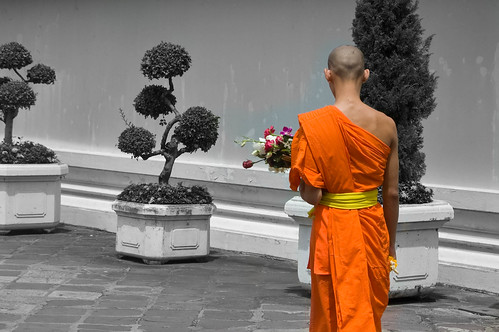
photo by zeevveez
Religion News for 9/10/2009
Hello, readers! Today in 422, Celestine I began his reign as pope. And today...
- Mohammed is the third most popular boy's name in England. (Daily Mail)
- One in 33 women has been the target of sexual advances by a religious leader, according to a new study by Baylor University. (WaPo)
- Hassen Abdellah, president of the Dar-ul-Islam mosque in Elizabeth, N.J., is trying to get 50,000 Muslims to pray on Capitol Hill on September 25th. (Islam on Capitol Hill-site contains automatic audio, WaPo, WaPo)
- Some Jewish communities are using Rosh Hashanah (September 18th this year) as a reason to emphasize stewardship of the earth. (RNS)
September 9, 2009
Religion News for 9/9/2009
Happy 9/9/09, readers!
- The Washington Post claims that the Christian Right is being resuscitated by the healthcare debate. (WaPo)
- Mahmoud Amedinejad has put a woman in his presidential Cabinet. (Miami Herald)
- Americans see Muslims as facing more religious discrimination than people of other faiths. (Pew)
- A traffic sign near the University of Utah was the victim of vandals/atheists. (Salt Lake Trib)
- The President of the Columbia Chapter of Americans United for Separation of Church and State has problems with state officials and public prayer. (The State)
September 8, 2009
Books!
I read quite a lot - you might have noticed from my earlier posts. And lately I've been reading a lot of religion books. Since this is my first daily update I figured I'd keep the content pretty light, and just let you all know what religion-related books I've been reading/intend to read soon.
1. What the Buddha Taught, by Walpola Rahula - Having asked the one close Buddhist friend I have what she thought about this book, she advised me that it was a pretty solid introduction. There are subsets and sects within Buddhism, as there are in any major religion, but this is a wonderful start if you're trying to understand the broad picture.
I have a pretty much scholarly interest in Buddhism but the lightness of being I felt when reading this book was a wonderful thing. There is a lot about Buddhism that makes a solid logical sense. It was this that really encouraged me to learn more about it, particularly since the Buddhists I know are journalists or scientists by trade. Whether you want to identify Buddhism as religious, philosophical, or otherwise, it is ultimately comforting and joyful, and I feel very satisfied knowing more about it.
2. The Screwtape Letters, by C.S. Lewis - I am a huge fan of Lewis, as is probably anybody who grew up going to Catholic school and reading the Chronicles of Narnia. As I got older I grew into his Out of the Silent Planet series. With Screwtape, feel like I'm finally reading a Lewis book meant solely for adults. I'm about a quarter of the way through, and the premise is entertaining, the concepts of demons and devils keep the book lively, and I am yet again happy to read the indirect meditations of a great Christian scholar. As far as I can tell, the book contains numerous prescriptions against temptation and for greater peace in one's life. There might be no writer so convincing of Christianity's virtues and yet so cognizant of the faults of the churches which represent it.
3. Confessions, by Augustine of Hippo - I have yet to really delve into this book, but simply happy to read what is essentially the inner struggle of a saint. Few Catholic saints are regarded as Augustine's intellectual equal, and perhaps what lies behind that is the description of his redemption. I would welcome any reader's comments to help me through this book: passages I should meditate on, ones that mean much to you. Let me know what I should look for in Augustine's Confessions.
Religion News for 9/8/2009
Greetings, readers! So I'm back from a hiatus and am considering today the launch of Religionography in earnest. As such, I will be doing my best to include several religion stories in a roundup, and write one longer meditation/feature/musing of my own. So, below is the first roundup. I hope you find something enjoyable and thought provoking.
- WaPo writer Monica Hesse is under fire from both supporters and opponents of gay marriage. (GR)
- Fr. Carl Kabat, an elderly Catholic priest who has spent years in prison for peace protests, hasn't given up. (NYT)
- Sojourners is hosting a "justice revival" in Dallas during November. (Sojourners)
- How heavy is your area on mortal sin? Check out the infographic from Wired and find out. (Wired)
- The Evangelical Lutheran Church in America is moving towards ordination of gays and lesbians. (ELCA, Tammeus)
July 23, 2009
Quick update...
The Northwest Religious Liberty Association is saying that Oregon's governor has signed the bill discussed yesterday as of the 16th. I've so far been unable to find another source saying so, as the bill signing seems to have been kept fairly quiet.
The angle of news on the bill has largely been about the issue discussed yesterday, wherein public school teachers are prohibited from wearing religious symbols or garb. But I do want to give balance on what proponents feel the bill does. From the NRLA's press release:
"What this Act does is clarify the responsibility of employers to accommodate the scheduling of leave time for the observation of religious holy days, or for the wearing of religious apparel in the workplace unless it poses a “significant difficulty or expense” to their business(es).
More specifically, it restores the original federal Title VII legal standard involving religious discrimination which obligated employers to demonstrate that they reasonably attempted to accommodate the sincerely held religious beliefs and practices of their employees before claiming that such beliefs and practices posed a “significant difficulty” and “expense” for their business(es). [Emphasis theirs.]"
July 22, 2009
Religious Expression - A Public Concern?
"No teacher in any public school shall wear any religious dress while engaged in the performance of duties as a teacher.”
Now, a bill called the Oregon Workplace Religious Freedom Act, also known as SB786, among other things, maintains that law. Pennsylvania is the only other state with such laws.

Which begs the question: why is the wearing of a kippah, a turban, a hijab, or a crucifix a problem in a public school setting, provided the teacher is not proselytizing?
Not being a parent myself, I admit that I probably can't appreciate the difficulty of explaining the religious practices of others to a child, much less my own. But I would hope parents would have enough faith in their teachers to be able to maturely and simply discuss differences in the classroom, be they religious, racial, or otherwise, without proselytizing.
Moreover, the law sends a mixed message to students with regards to civil liberties. Reading the ACLU's guide on freedom of expression for students makes it clear that students may wear religious garb and speak relatively freely, provided there is no interference in the education of other students. Not to afford the adults who teach them the same right seems, to me anyhow, rather strange.
Since the bill has already passed the Oregon legislature, Sikh and Muslim groups are encouraging the state's governor to issue a veto.
So do you think that a teacher's wearing of religious items imparts religious value to their students? Is it a matter of keeping religion out of the classroom, or is it more vital that children and their parents use this as an opportunity to understand the diversity of the world we live in?
May 26, 2009
Happy Coincidence
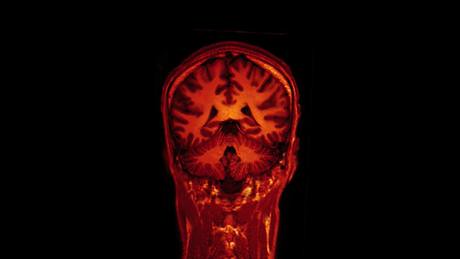 Not long after my last blog post I was sitting in my car listening to NPR with my little sister. A piece came on discussing neuroscience, religion, and the link between the two. It was part of a series of reports by Barbara Bradley Hagerty, NPR's Religion correspondent, and a former colleague of mine. Barbara is a wonderful reporter and her new book, out on many of the same topics as the book I just reviewed, is out now. She also did a week-long series of reports, which are pretty fantastic. I haven't read the book just yet, but I am eager to find out about what her website describes as " a small moment as an adult" which "triggered a revaluation of her beliefs, which in turn led her to a new way of thinking about God and faith."
photo by Jon Olav
May 13, 2009
Why God Won't Go Away
Though the book I have recently finished reading, Why God Won't Go Away, was published in 2001, I feel like the subjects it deals with are worth revisiting every once in a while. Here's the basic setup:
Two neuroscientists (Andrew Newberg and Eugene D'Aquili) are curious what's going on in a human brain during mystical experiences. From measuring the brain during deep Buddhist meditation and deep Christian prayer, they come to realize that the brain is capable of (at least temporarily) shutting off the ego, and losing the "self," creating a sensation of becoming one with God, or Atman, or experiencing Nirvana. There are endless names for the exact experience, but they all hold similar characteristics. These moments of mystical experience, to the monks and nuns being studied, are at least as real, if not more real, than everyday waking life. And it is because our brains experience something that we perceive them as "real."
Also examined are the biological roots of myth, the underlying social function of religion and ritual, and the exact neurobiological processes which cause the brain to experience the loss of self.
For all my skepticism about the truth of religion, this book, from a scientific perspective (specifically, a neurological perspective), does much to reassure the reader about the unifying and transcendent aspects of religion. There is also much said about the conflicting natures of science and religion, fact and faith. To put it as the authors do: "All that is real can be verified by scentific measurement, therefore, what can't be verified by science isn't really real." This presents a problem when you are able, with science, what can only be perceived with faith.
I ended the book feeling what I felt as I went into reading it: that science is the human means by which people discover the beauty and mystery of whatever underlying force may be out there. Again, to quote Newberg and D'Aquili: "...if we understand the metaphorical nature of [science and religion's] insights, then their incompatibilities are reconciled, and each becomes more powerfully and transcendentally real."
photo by gumuz
Subscribe to:
Posts (Atom)