May 26, 2009

Happy Coincidence

Not long after my last blog post I was sitting in my car listening to NPR with my little sister. A piece came on discussing neuroscience, religion, and the link between the two. It was part of a series of reports by Barbara Bradley Hagerty, NPR's Religion correspondent, and a former colleague of mine. Barbara is a wonderful reporter and her new book, out on many of the same topics as the book I just reviewed, is out now. She also did a week-long series of reports, which are pretty fantastic. I haven't read the book just yet, but I am eager to find out about what her website describes as " a small moment as an adult" which "triggered a revaluation of her beliefs, which in turn led her to a new way of thinking about God and faith."


photo by Jon Olav

May 13, 2009

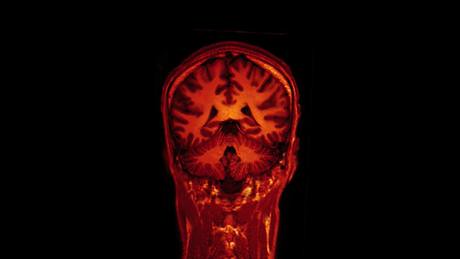
Why God Won't Go Away


Though the book I have recently finished reading, Why God Won't Go Away, was published in 2001, I feel like the subjects it deals with are worth revisiting every once in a while. Here's the basic setup:

Two neuroscientists (Andrew Newberg and Eugene D'Aquili) are curious what's going on in a human brain during mystical experiences. From measuring the brain during deep Buddhist meditation and deep Christian prayer, they come to realize that the brain is capable of (at least temporarily) shutting off the ego, and losing the "self," creating a sensation of becoming one with God, or Atman, or experiencing Nirvana. There are endless names for the exact experience, but they all hold similar characteristics. These moments of mystical experience, to the monks and nuns being studied, are at least as real, if not more real, than everyday waking life. And it is because our brains experience something that we perceive them as "real."

Also examined are the biological roots of myth, the underlying social function of religion and ritual, and the exact neurobiological processes which cause the brain to experience the loss of self.

For all my skepticism about the truth of religion, this book, from a scientific perspective (specifically, a neurological perspective), does much to reassure the reader about the unifying and transcendent aspects of religion. There is also much said about the conflicting natures of science and religion, fact and faith. To put it as the authors do: "All that is real can be verified by scentific measurement, therefore, what can't be verified by science isn't really real." This presents a problem when you are able, with science, what can only be perceived with faith.

I ended the book feeling what I felt as I went into reading it: that science is the human means by which people discover the beauty and mystery of whatever underlying force may be out there. Again, to quote Newberg and D'Aquili: "...if we understand the metaphorical nature of [science and religion's] insights, then their incompatibilities are reconciled, and each becomes more powerfully and transcendentally real."

photo by gumuz

January 27, 2009

Jezebel!


Recently I finished reading Jezebel: The Untold Story of the Bible's Harlot Queen. It's an interesting historical biography of one of the Bible's greatest villains. Author Lesley Hazleton examines archeological findings, the current Holy Land environs, biblical and modern sociology, and historical texts in her exploration of Jezebel as a woman, character, and ruler.

Many people tend to think of the Bible as a book written by God, or transmitted divinely through his servants into the book. But historical evidence clearly shows that the Old Testament, at least, was written down long after the events that took place. Hazleton gives us a clear idea of the biases and goals of those ancient authors. It's not to say that the story of Jezebel in the Bible is not true, in any real sense it's as true as any story, but it is nonetheless colored by the writers and numerous editors and translators of the book of Kings.

In examining Jezebel, we can tell that the book is written from a clearly modern, feminist perspective, giving a refreshing and occasionally jarring view of what it means to be a harlot. This goes back to more than just the sexual connotations of the word, exploring the religious meaning. For example, there is a short bit of background on the word "infidel," and an interpretation of why we use the word "bitch." So much in this book is explored through language and derivative meaning that at points the connections could be a bit of a stretch.

There are also parallels to be drawn between ancient prophets and modern religious firebrands, and the deep reasons for the Israeli-Palestinian conflict today. In examining the hate that fuels much of the fighting in the Holy Land, Hazleton would contend that Elijah, deeply involved in Jezebel's story, is the forerunner of many a fundamentalist religious leader, in each of the three Abrahamic faiths.

The deep thoughts here are engaging, and I would reccomend the book highly to anybody looking to know more about how the Bible was written. I fully intend to read Hazleton's other similar book on Mary, mother of Jesus.

Photo by ClockworkGrue

October 9, 2008

Religulous!


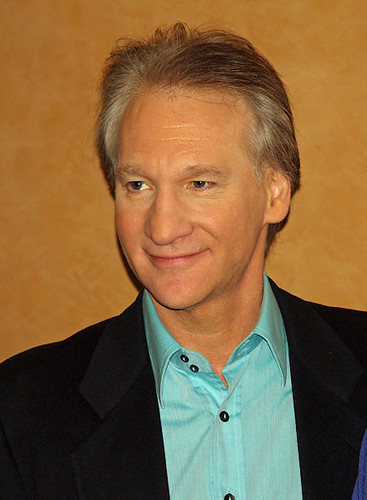
Yesterday, I went to the movie theater to see Bill Maher's new movie, Religulous. I've been a fan of Maher's for a while, and sincerely admire his ability to take on taboo subjects unabashedly, though I'll be the first to admit he's often abrasive.

Religulous deals primarily with the absurdities of the Abrahamic religions: Christianity, Islam, and Judaism. There's the fact that all religions require beliefs that make no logical sense--miracles. There is the hypocrisy evident in enormous and wealthy clergy when religions advocate thrift and charity. And there are the disconnects between religion and science as well as religion and nationalism. There's also a bit of attention paid to newer religions, namely Scientology and Mormonism, though to the detriment of the movie and the audience's understanding, nobody of those faiths is represented.

Clearly this is a bit much to go into here, but I would like to get at one central point of Maher's movie. A driving question of the movie is why faith is inherently good. And I feel that ultimately, he answers his own question by saying that he does understand that when all else is gone, when you're alone in prison, a loved one's died, or you struggle with addiction, faith can be the only thing you have left. He acknowledges moments of what he might refer to as his own weakness, making a deal with God to quit smoking at age 40.

Maher refers to himself as an agnostic, rather than as an atheist, because atheism reflects something of the certainty of the religions that he just can't swallow. But in the closing scene, filmed where, according to Maher, Christians believe the world will come to an end, he does say (and I'm paraphrasing) that no God will come to save us.

Some interesting parallels are made by Maher as a mythologist. He points out the numerous similarities of Jesus to other gods of older religions, such as Krishna (also the product of a virgin birth according to some Hindu sources) and the ancient Egyptian god Horus (some sources cite Horus as the product of a virgin birth, and the movie relates a story wherein Horus resurrects a person with a name translated as "Lazarus").

Perhaps most alarming about this movie are not the questions Maher asks but the unwillingness of some people he talks to to engage him in critical conversation. If anything, the movie makes painfully obvious the need for religious eductation, particularly for those vocal about their beliefs.

Below, there are some videos of Maher's interview with Jon Stewart. What do you think about his stances towards belief? Should people with abiding faith be able to answer questions so harshly critical of belief itself?


Photo by david_shankbone
Used under the CC Attribution License

October 8, 2008

An Introduction and Some Background


Nice to meet you all!

My name is A.C. Valdez. I am a freelance journalist living in the Washington, D.C. area. I have started this blog as a way of keeping track of my thoughts on religion news and religion issues.

To give you some idea where I'm coming from, I was born in L.A. and in the 90s, my family moved to the D.C. suburbs. I was raised Catholic, though I am no longer an observer. My father is a liberal Catholic. My mother (who is now deceased) was raised Catholic as well, gave up worship as an adult and eventually adopted the attitude that God wants very much for people to figure out how to live for themselves. I probably have Jewish ancestry somewhere back there. Though I have no better evidence of it, my father claims many Spanish Jews migrated to the New World due to persecution.

I have worked at PBS and NPR as well as in smaller media companies. And I really fell in love with religion as a "beat" while working at NPR. Religion or faith means so much to many people, and in such different ways. Unlocking that meaning is a fascinating process. And it probably goes back to my fascination as a kid with ancient Greco-Roman and Norse myths. I remember asking my dad one time why we believed what we did as I grew up and he just replied "Well, it's our mythology." So I studied Catholicism throughout high school. And I've loved learning about religion ever since.

Hopefully by reading this blog, and leaving comments, you'll be able to learn something new, and teach me a couple of things, too.

Photo: "Shrine To World Religions" by EtterVor
Used under a CC Attribution License